Artemis II: Humans fly to the moon after more than 50 years
This browser does not support the video element.
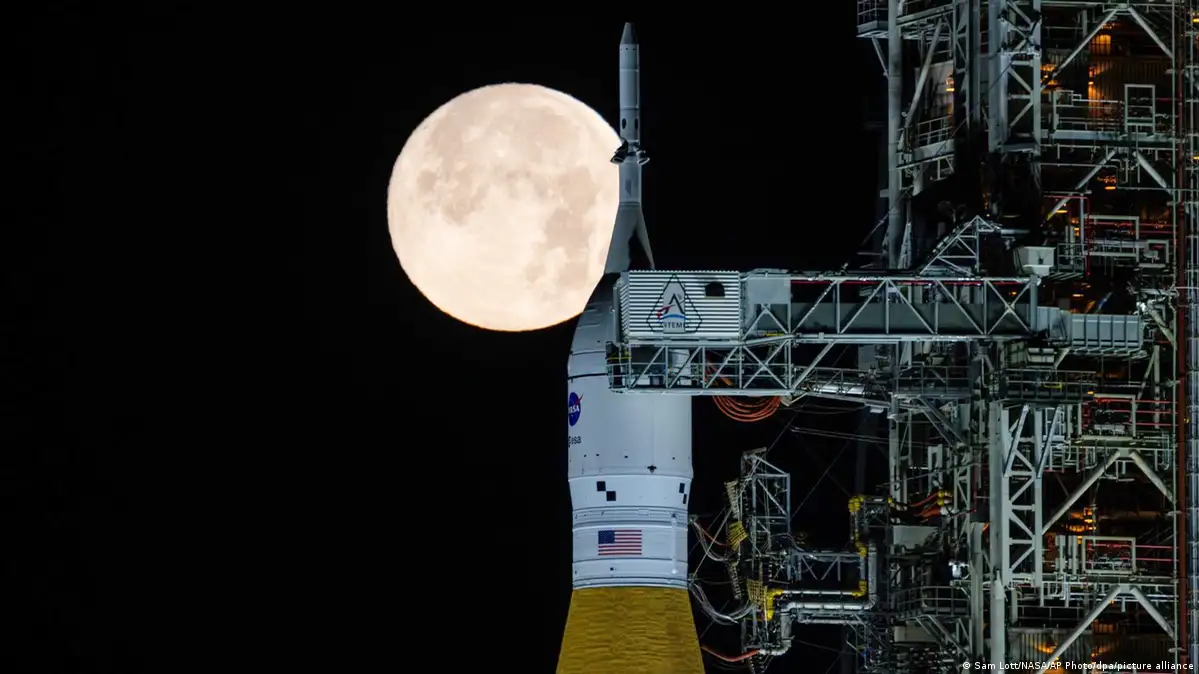
More than 50 years after Apollo 17, humans are set to return to the moon. The Artemis II mission will send four astronauts on a ten‑day journey around our closest celestial neighbor, testing the spacecraft and observing the far side of the moon, parts of which have never been seen directly by humans.
The launch date has been postponed by NASA twice already. Plans to launch the mission at the beginning of February were pushed first to March and then to April because of a problem with the rocket’s helium supply. It now needs to be moved back to its hangar for repairs.
The multibillion‑dollar Artemis program aims to eventually land crews on the lunar surface again. It’s led by the US Space Agency NASAwith major contributions by the Canadian Space Agency CSA and European Space Agency ESA.
NASA plans long‑term stay on the Moon
Since water ice has been detected near the lunar south pole, long‑term stays have become more realistic. Plans include a potential settlement on the moon’s surface and a lunar‑orbiting station, which could serve as a stop on the way further away to Mars.
Artemis III was planned for mid-2027, but seems to be delayed to 2028. It would mark the first human landing since 1972.