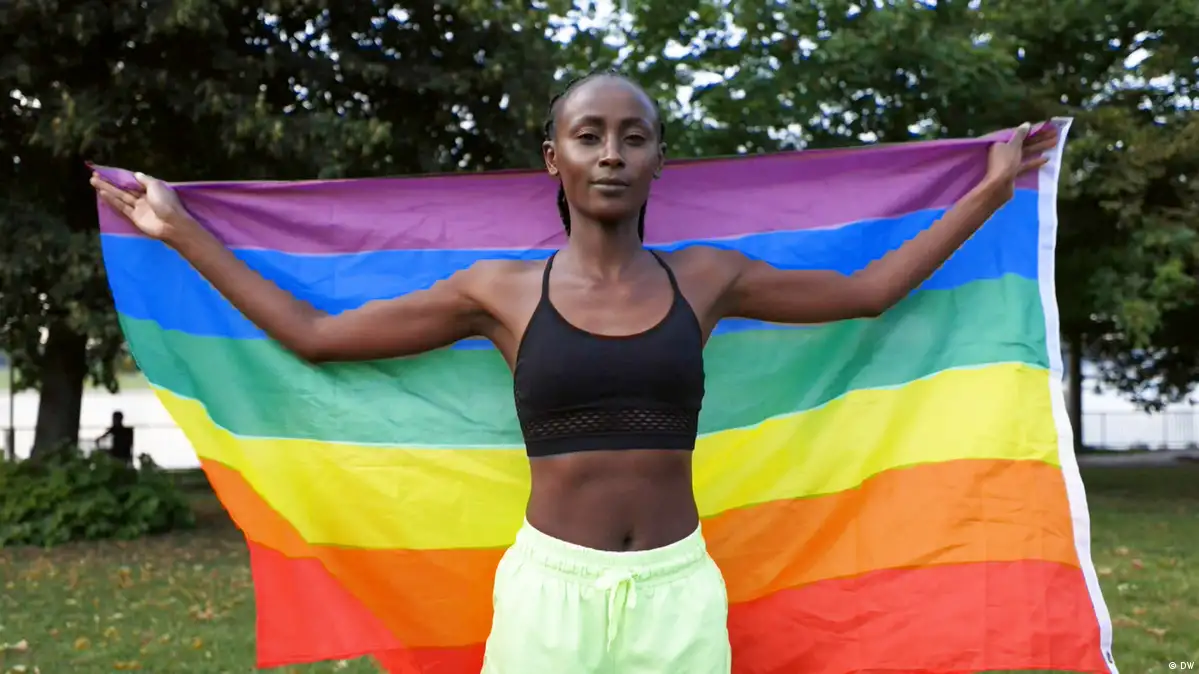
Think back to your teenage years: the butterflies in your stomach, the dizzy excitement when you thought about someone you liked. That’s often when sexual orientation starts to show itself.
It is one of the most personal aspects of human identity, yet it remains among the least understood.
Sexuality on a spectrum
Decades of research has shown that sexual orientation isn’t one-size-fits-all. It exists across a wide spectrum. Despite this, most research has focused on homosexuality and heterosexuality, especially among men.
"We know less about female sexual orientation than we know about male sexual orientation," Michael Bailey, a psychologist and behavioral geneticist at Northwestern University in the US, told DW. "Male sexual orientation has been studied for longer."
But here’s the thing: It isn’t just about who you’re attracted to. Sexual orientation also involves identity and behavior, making it a lot more layered. So, what influences its development?
Genetic Factors: Is sexual orientation inherited?
Genes play a role, but not in a simple "gay gene" kind of way. "The way to think about genetic influence on behavior, is that it's going to be hundreds or perhaps thousands of genes influencing a trait," Bailey said.
Identical twins, for example, can share the same DNA and upbringing yet still differ in orientation. They’re more likely to match than fraternal twins, which suggests some genetic influence — that is only one part of a big puzzle.
On top of that, conditions in the womb, including hormonal effects on brain development, could influence orientation. But here’s the catch: most of those theories emerge from animal research, so the human picture is still fuzzy. "And that is something that is just hard to study because, you know, we obviously can't perform experiments on fetuses," Bailey explained.
Can the environment influence your orientation?
What about upbringing or life experiences? The short answer: no!
"We find that kids who tend to be gender-nonconforming are more likely to identify as being lesbian, gay, bisexual when they grow older," said Olakunle Oginni, a clinical academic fellow in behavior genetics and child and adolescent psychiatry at Cardiff University in the UK. "However, it's an association and it's not 100%."
Turns out: trauma, parenting styles, or meeting someone gay also don’t change your orientation. And despite political claims, there’s no scientific evidence that homosexuality can be taught or spread. In fact, on May 17, 1990, the World Health Organization (WHO) removed homosexuality from its list of human diseases.
Still, sexual orientation continues to divide societies. Homosexuality, for example, is punishable in at least 67 countries, and in seven, it carries the threat of the death penalty. People face exclusion, discrimination, and persecution.
The detrimental outcome of conversion therapy
Attempts to force people's orientation — through conversion therapy — range from exorcism to electric shocks to counseling. Worse, they often cause serious harm, leading to anxiety, depression, and even suicidal thoughts.
"The evidence we have is that they make things more difficult for people in terms of feeling negatively about themselves, struggling to accept themselves and having more mental health difficulties," Oginni concluded.
Major international institutions like the European parliament and the United Nations therefore condemn practices that fall under conversion therapy.
If you are suffering from serious emotional strain or suicidal thoughts, do not hesitate to seek professional help. You can find information on where to find such help, no matter where you live in the world, at this website: https://www.befrienders.org/.
Author: Katja Sterzik
Edited by: Sushmitha Ramakrishnan