China's plan to never run out of food
This browser does not support the video element.
Food security is an issue on many global leaders' plates. The climate phenomenon El Nino could destabilize food security worldwide by increasing the risk of floods, droughts and heat waves. And the conflict raging over the Strait of Hormuz is impacting global supply chains.
Grain exports have also been hit by Russia's full-scale invasion of Ukraine, and the US-Israeli war on Iran is stalling fertilizer shipments. Meanwhile, US President Donald Trump's trade war and tariffs have also hit food prices.
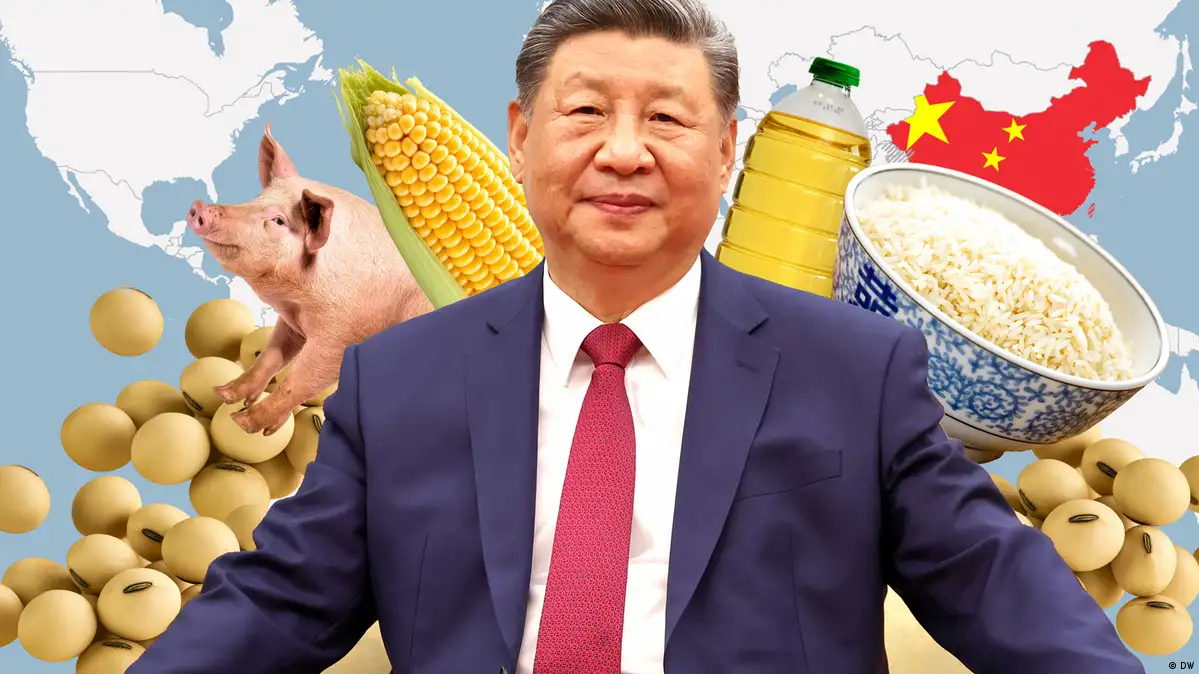
Chinese President Xi Jinping and Chinese Communist Party (CCP) officials are trying to get ahead of the game on food security, not least because a history of famines has marked the collective consciousness of the country. Mao Zedong's "Great Leap Forward" caused what is thought to be the worst human-caused famine in history.
And in the Cultural Revolution, Xi Jinping himself reportedly spent many hungry days in rural China. Xi and the CCP have been pushing to grow staples like rice at home, increase China's food reserves and also secure imports from abroad.
Brazil has replaced the US as China's biggest soybean supplier, as China expands in Latin America. And Xi's infrastructure megaproject, the Belt and Road Initiative, serves as a "Food Silk Road" to help imports reach China without the risk of getting stuck in choke points.