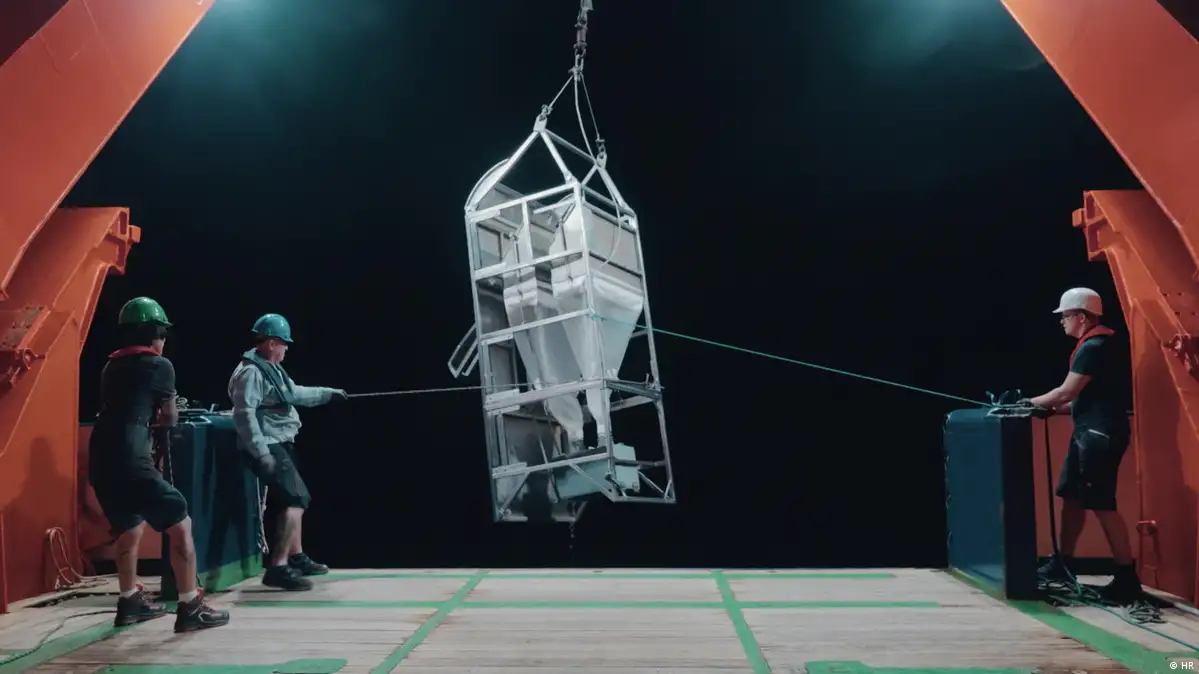
It's 3 a.m. in the middle of the Atlantic, and Meteor is surrounded by darkness. But the 58 men and women on board are wide awake. All eyes are on the ship's crane as it hauls a "box corer" - a mechanical sample collector - from a depth of five kilometers. The heavy seas cause it to slam against the ship's hull. The immense pressure levels involved in deep-sea research require heavy-duty equipment, with parts made of steel and even titanium. But when the crew finally manage to get the sample box back on deck, they find it's empty: containing only water and no seabed sediment. After the immediate disappointment, they soon set about preparing the next attempt before sunrise, because time — and money — are of the essence on this five-week expedition. "More than 90 percent of deep-sea species have probably not yet been discovered," says marine biologist Torben Riehl. With this vast and enigmatic ecosystem under threat from climate change, overfishing, oil drilling and pollution, the team's mission is an urgent one - to study the manifold creatures before they disappear forever.
For more on this series, follow this link.