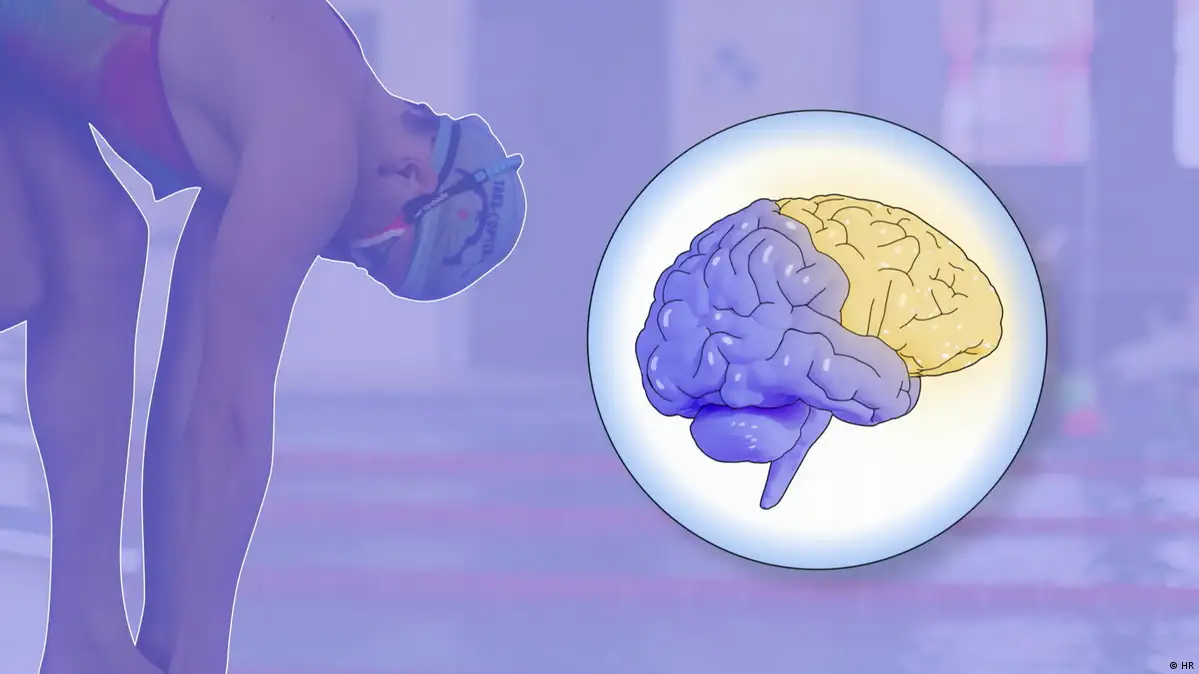
In an increasingly demanding world, we seem to be able to concentrate less and less. How does our brain manage to focus, even when we're constantly exposed to distractions? This documentary accompanies a top athlete, an air traffic controller trainee, and an e-sports professional on their journeys in search of maximum focus.
Swimming world champion Angelina Köhler has to be fully focused for a certain number of seconds to win a race. How does she prepare for this? According to Angie Köhler, the mind is crucial: "The sequences we train in swimming are so precise and technical that if you're not focused, you can't perform them quickly. If you can't concentrate properly, you lose."
Jan Peter Konopinsky is a trainee air traffic controller. He has to maintain his concentration for several hours at a time. He can't afford to make mistakes, because human lives depend on him.
Dennis "Denninho" Malcherczyk is an "eFootballer" playing in the virtual Bundesliga. He trains for several hours every day. He, too, must be fully focused: His success depends on his reaction speed, analytical skills, and ability to recall hundreds of key combinations at the right moment. Does his talent for multitasking help him?
Once each of these three subjects have created the right training and working environment for themselves, things sometimes go so well that they forget time, space, and everything around them. Then, they're in a mental state of complete immersion, a state of highest concentration. It's a chief field of interest for researchers like Prof. Dr. Corinna Peifer from the University of Lübeck. She's investigating how this flow can be measured.
Neuroscientist Dr. Henning Beck and "mental coach" Thomas Baschab observe the three subjects, describing what's happening in their bodies and minds. Their insights are valuable to anyone wanting to improve their own concentration.
For more documentaries, follow this link