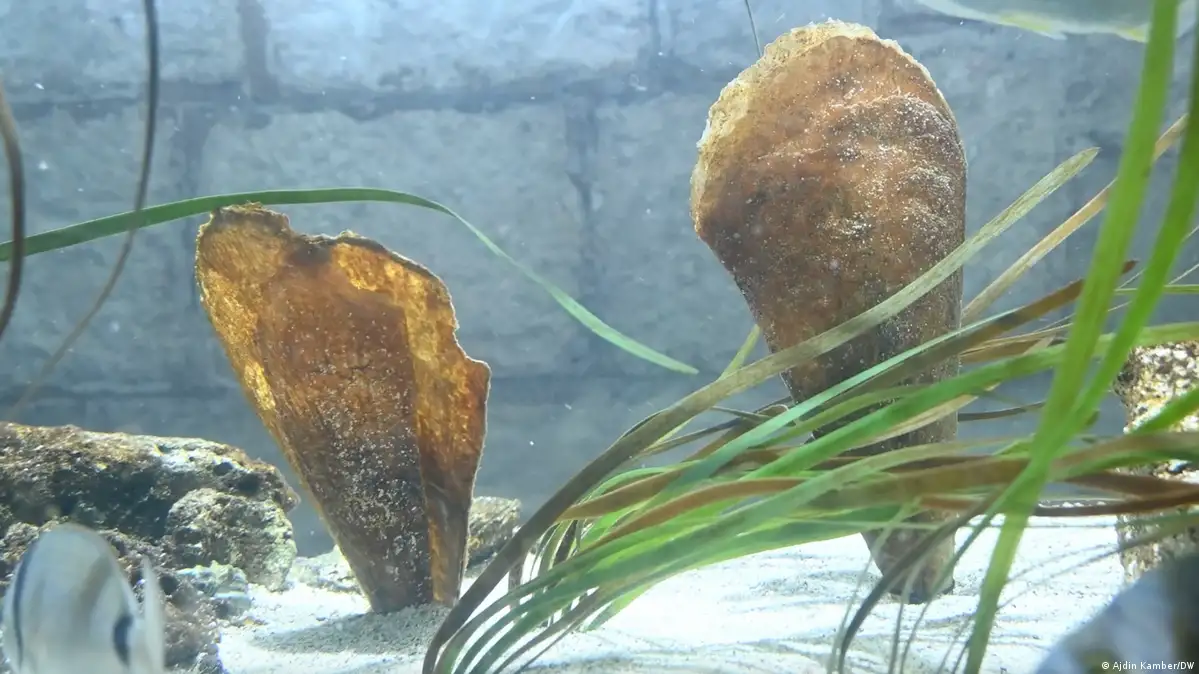
Pinna nobilis, also known as the noble pen shell, is a large Mediterranean clam essential to the health of marine ecosystems, acting as a natural seawater filter. But its population has plummeted over the past decade, and the species now faces extinction.
The main cause of this mass die-off is the parasite Haplosporidium pinnae. First detected off the coast of Spain in 2016, it rapidly spread across the Mediterranean, including the Adriatic Sea — the northernmost arm of the basin — wiping out nearly all remaining populations. Scientists estimate that 99% of noble pen shells have already vanished.
There is, however, a glimmer of hope in Pula, Croatia, where researchers are attempting to breed resistant specimens in captivity — a groundbreaking effort that could determine whether this iconic species survives.