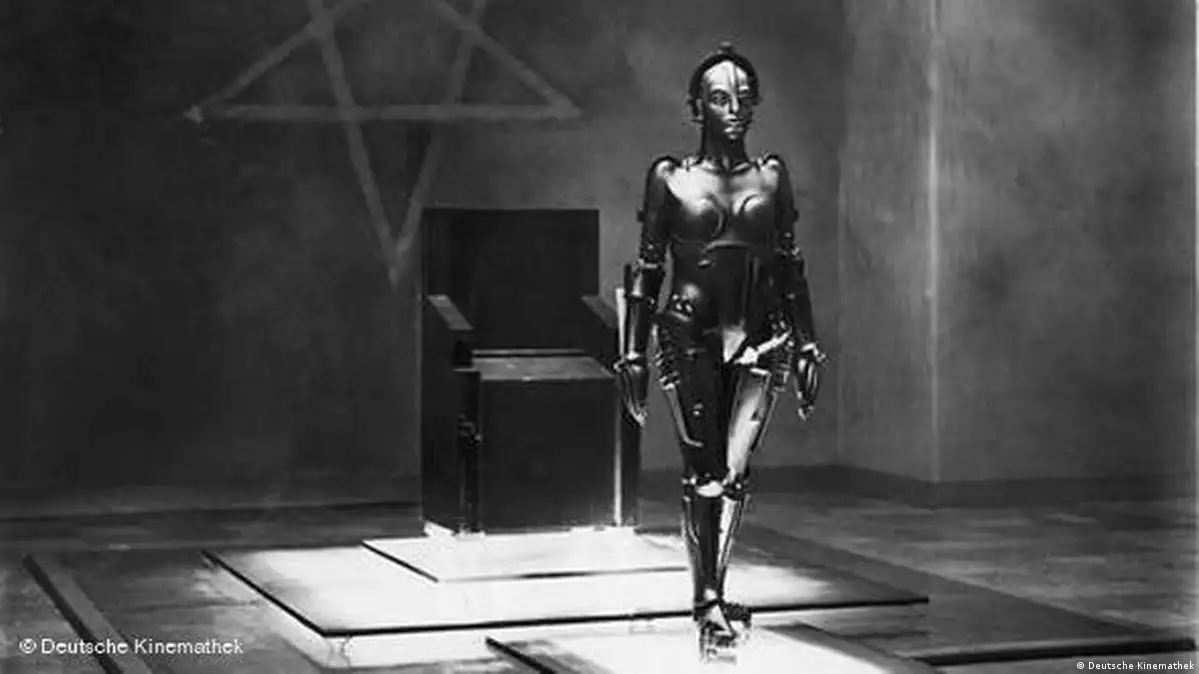
Before "Star Wars" and "Blade Runner," there was "Metropolis" — the famous 1927 German silent film. From soaring megacities and humanoid robots to surveillance and class conflict, Fritz Lang’s vision became the blueprint for modern science fiction stories.
Through groundbreaking effects, lost footage and a stunning restoration decades later, "Metropolis" continues to shape how we imagine technology, power and the world ahead.
For more from Arts Unveiled, follow this link.
This video features excerpts from Fritz Lang's visionary masterpiece "Metropolis" (1927), taken from the meticulously restored 2010 version by the Friedrich-Wilhelm-Murnau Foundation. Since 1966, the foundation has been dedicated to preserving, protecting and ensuring access to a significant portion of Germany's cultural and film-historical heritage.
It was also responsible for the globally acclaimed restoration — made possible by a spectacular discovery in Buenos Aires — which brought the nearly complete original version back to the screen, including the music by Gottfried Huppertz reconstructed by Frank Strobel.
CREDITS
Metropolis, Universum Film AG, 1927
Director: Fritz Lang
Screenplay: Thea von Harbou; Fritz Lang (uncredited)
Cinematography: Günther Rittau; Karl Freund
Optical Special Effects: Eugen Schüfftan (Schüfftan process); Ernst Kunstmann
Set Design: Otto Hunte; Erich Kettelhut; Karl Vollbrecht
Sculptor: Walter Schulze-Mittendorff
Music: Gottfried Huppertz
Restoration 2010: Friedrich-Wilhelm-Murnau-Stiftung, Wiesbaden
In association with: Deutsche Kinemathek – Museum für Film und Fernsehen, Berlin
In cooperation with: Museo del Cine Pablo C. Ducros Hicken, Buenos Aires
Edition: Martin Koerber, Frank Strobel, Anke Wilkening
Reconstruction and synchronization of the original music by Gottfried Huppertz (2010): Frank Strobel
Instrumentation of missing parts of the score: Marco Jovic
Music notation: Jörg Peltzer
Edition commissioned by ZDF / ARTE: EUROPÄISCHE FILMPHILHARMONIE - Die Film Philharmonie GmbH.
Recording: Rundfunk-Sinfonieorchester Berlin - an ensemble of Rundfunk Orchester und Chöre GmbH
Musical direction: Frank Strobel