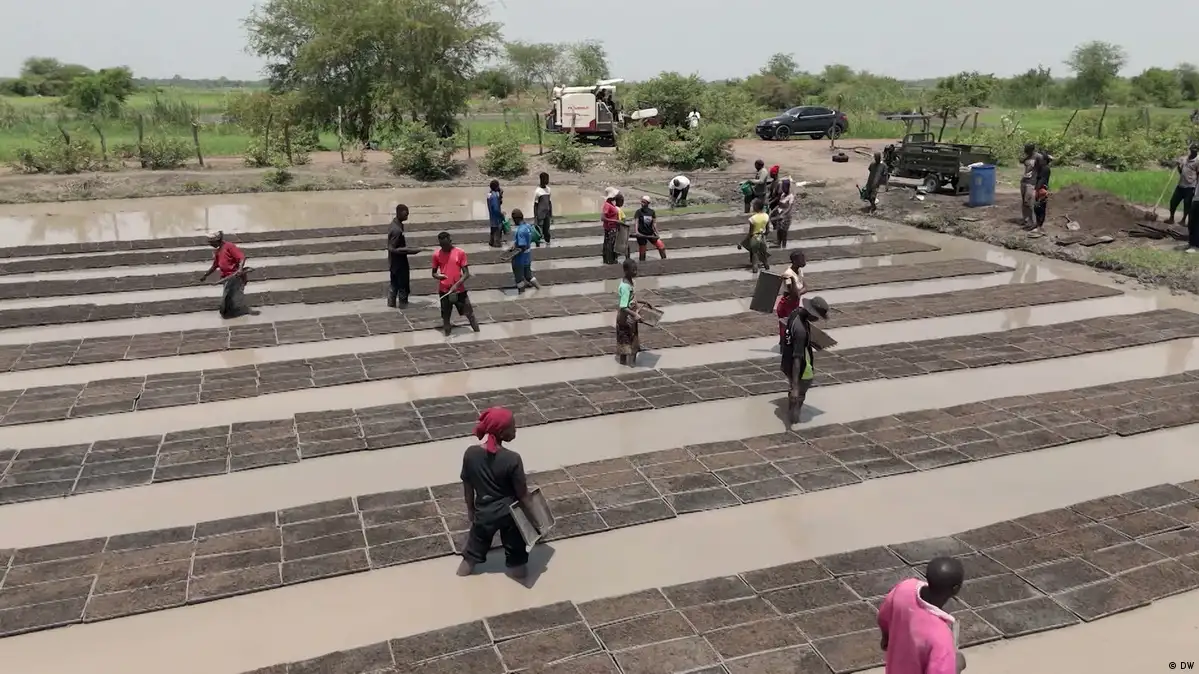
Rice farmers in The Gambia's Central River Region are facing a growing threat from saltwater. Despite being 200 kilometers upriver from the Atlantic, in the village of Choya, rice fields are becoming increasingly saline as rising seas and weaker rainy seasons push saltwater farther inland. Yields are falling, worsening the country’s dependence on imports: in 2024, The Gambia produced around 52,500 tonnes of rice but imported 245,000 tonnes. The government aims for rice self-sufficiency by 2030, but salinity could put up to 30 percent of rice-growing land at risk. Solutions include dikes, canals and sluice gates to control water, mechanization to boost productivity, and research into salt-tolerant rice varieties. Yet major funding gaps remain, leaving farmers urgently calling for protection from saltwater.