What makes someone fall in love with science?
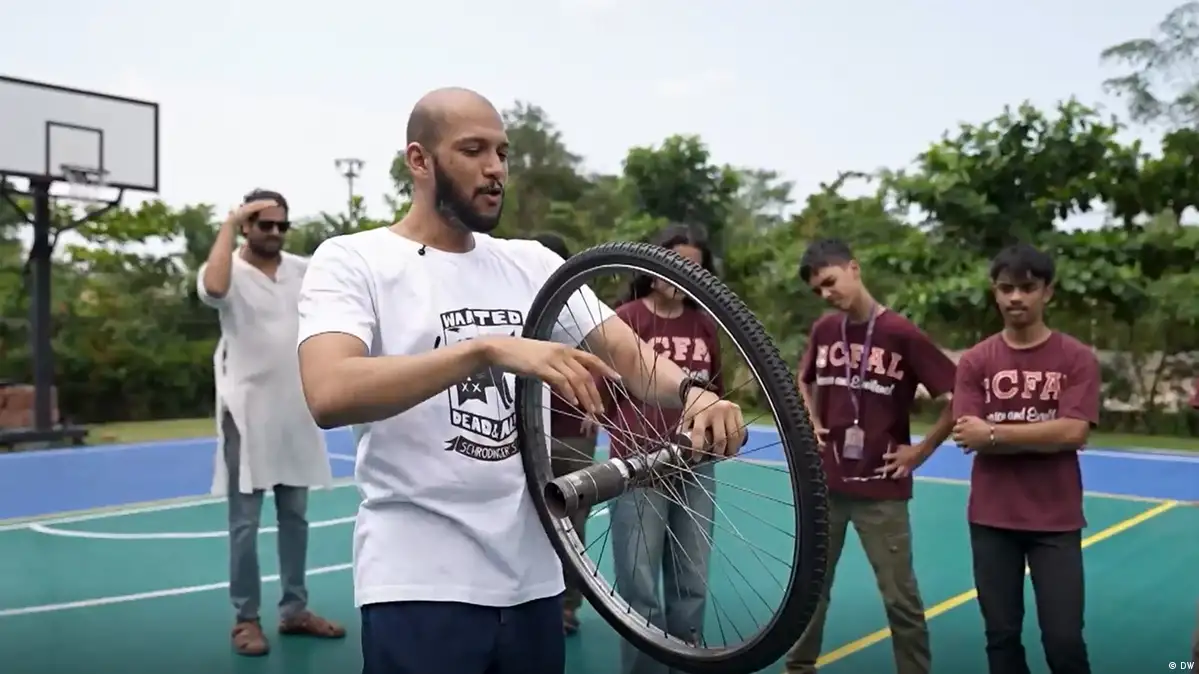
For Mahesh Shenoy, it wasn’t just the formulas or the facts, it was the why. Why does gravity work the way it does? Why does electricity produce light? And most importantly, how do we explain that to someone else?
Eight years ago, Mahesh was a physics teacher making revision videos for his students. Today, he’s one of India’s most popular science communicators, with over 400,000 YouTube subscribers, a growing online community, and a mission that goes far beyond the blackboard. He’s part of a new wave of creators across India who don’t just teach science, they bring it to life. They animate it. They question it. And in doing so, they help thousands rediscover a sense of wonder.
But Mahesh’s work also points to something deeper. In a world flooded with misinformation, science communication is becoming more than just a creative skill. It’s a critical tool.
That’s why places like the Indian Institute of Science Education and Research (IISER) in Mohali are taking it seriously and offering a dedicated course in science communication. Students there are learning not just to do science, but to talk about it – clearly, creatively, and accessibly.
From writing news-style explainers to creating short videos, they’re exploring what it means to be a communicator in the age of algorithms.
Author: Manira Chaudhary
Edited by: Sushmitha Ramakrishnan