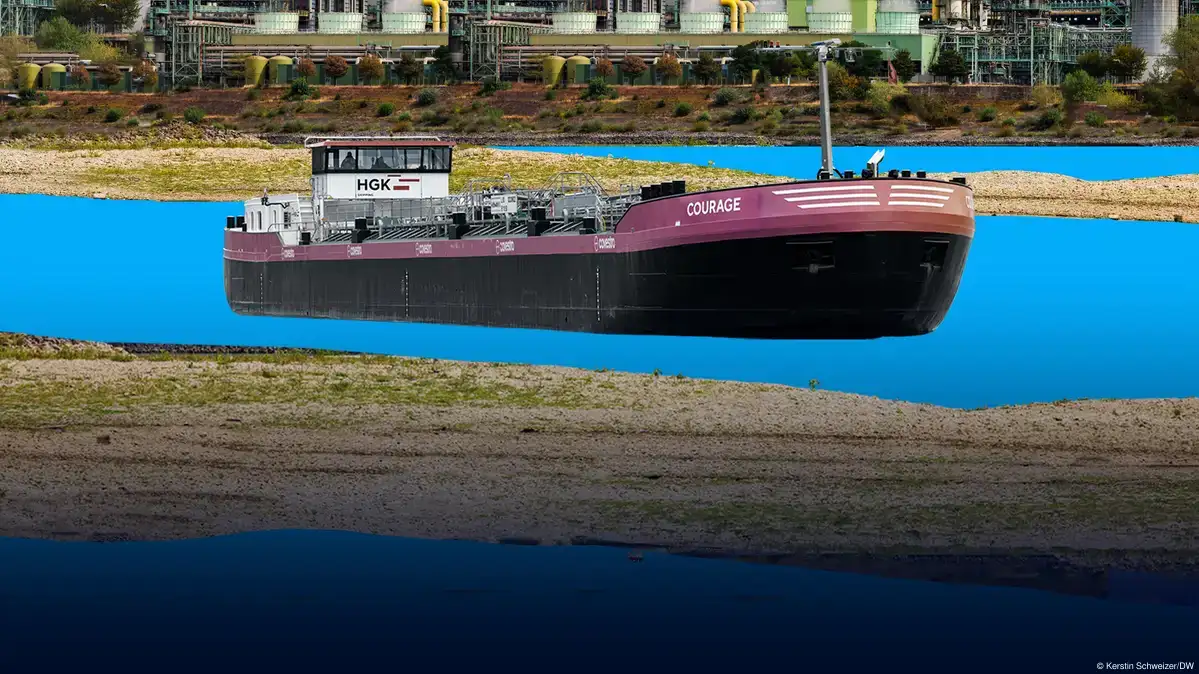
Low-water vessels are increasingly seen as a key solution to maintain Rhine shipping and protect European supply chains as climate change drives increasingly frequent low-water conditions.
Researchers at Germany's DST Development Centre for Ship Technology and Transport Systems are testing innovative ship designs that are wider, lighter and equipped with smaller propellers, enabling them to operate safely in shallow water.
Demand for low-water vessels is rising, with shipping companies like HGK investing in specialized fleets after recent droughts exposed vulnerabilities in inland transport.
While these vessels can carry up to three times more cargo during low-water periods, they also consume around 30% more fuel, creating a difficult balancing act between resilience, cost and sustainable shipping.