Turkey's big bet to become the new energy hub
This browser does not support the video element.
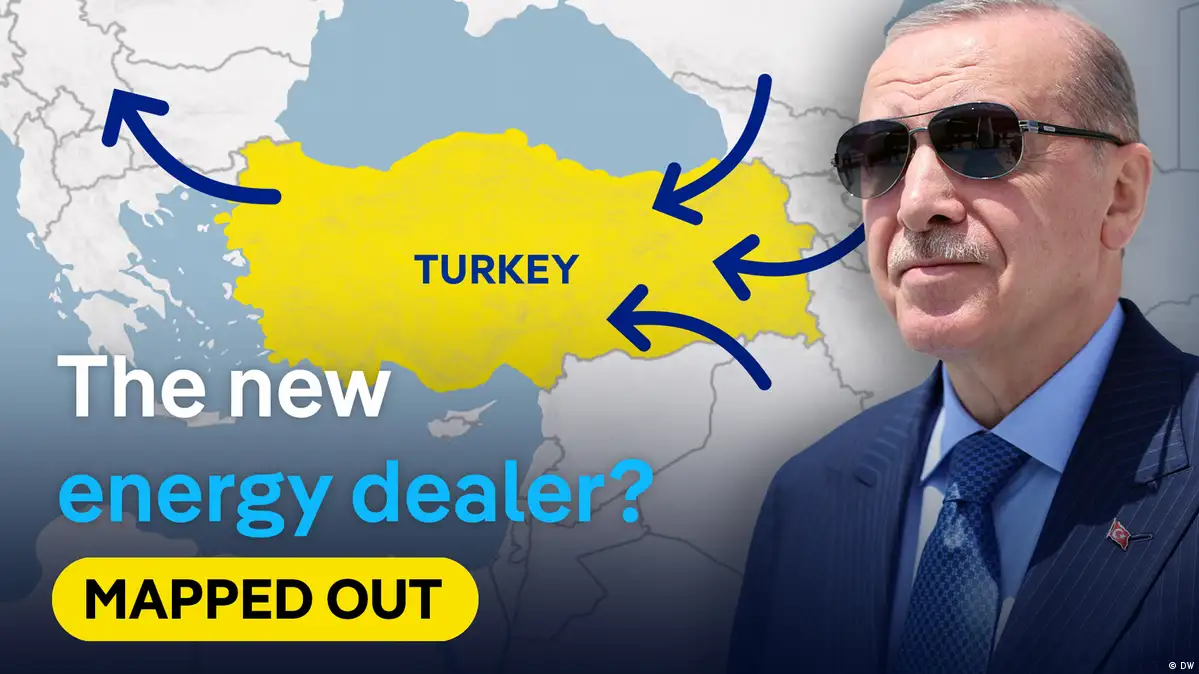
For decades, Turkey was heavily dependent on imported energy, spending billions on oil and gas from abroad. Now, Ankara has a bigger ambition: Not just securing its own energy future but becoming a country that helps power others.
Sitting between Europe, the Middle East, the Caucasus and Central Asia, Turkey sees itself as the natural crossroads for energy flows. Natural gas from Azerbaijan crosses the country through the Trans Anatolian Natural Gas Pipeline Project, or TANAP. TurkStream is the last major pipeline still carrying Russian gas into the EU, even after Russia's full-scale invasion of Ukraine that saw European leaders scrambling to find alternative energy suppliers.
Turkey also invests heavily in gas and LNG infrastructure at home, building terminals on land and at sea, and storage units. All in a bid to become a marketplace for trading energy. It is also expanding the flows of oil that run through its pipeline connecting Iraq's oilfields to Ceyhan in Turkey which has become more relevant following the US-Israeli war on Iran and Tehran's blockade of the Strait of Hormuz.
At the same time, Turkey is rapidly expanding wind and solar power and promoting itself as a hub for clean energy. It has pitched a "green corridor" to Europe that would carry renewable wind and solar power from the Caspian Sea to the EU.
The timing is significant. Turkey is hosting the UN climate summit COP31, positioning itself not only as an energy transit powerhouse, but also as a player in the global climate conversation.
So, what's really behind Turkey's ambitions to become an energy hub? And does it stand a chance to become an energy superpower?