Neuschwanstein: Ludwig's dream, Ludwig's tragedy — part 1
This browser does not support the video element.
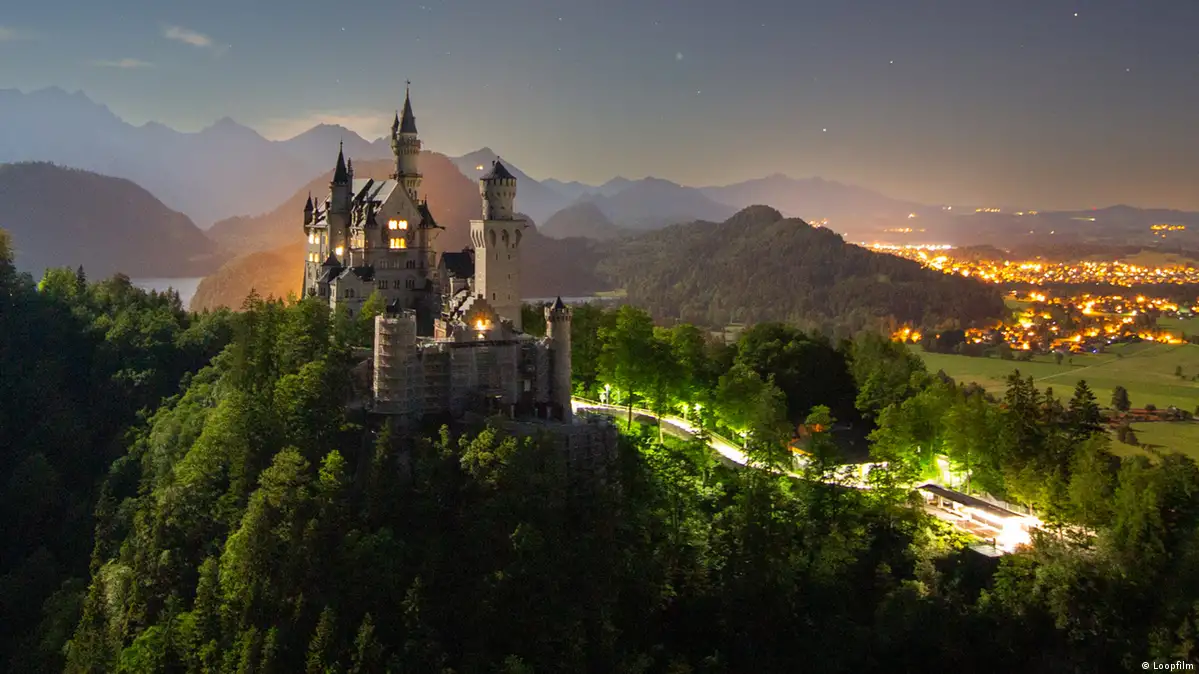
Neuschwanstein: an iconic building that sits somewhere between architectural genius and kitsch madness. King Ludwig II of Bavaria wanted the castle to be a world in which he could escape the realities of being a monarch. And nothing would stand in the way of him realizing his vision. The young king's idea to build his castle on a steep mountain peak was ambitious in itself. Inspired by German folk legends and the works of composer Richard Wagner, Ludwig oversaw every aspect of the construction, down to the smallest detail. Nothing happened without the king's personal approval. This posed an immense challenge for the architects, who constantly had to adapt their plans. But the result is a breathtaking achievement, a highly detailed and consciously historicized architectural feat. And yet what makes Neuschwanstein so special is not the building's splendor, which is often described as kitsch, but the way in which it reflects Ludwig's own idealized worldview. It was intended not as a seat of power but as a private refuge, a ruler's personal fantasy rendered in stone. As time went on, Ludwig withdrew further and further into seclusion. Ultimately, the life and death of this "fairy-tale king" (1845-1886) are inextricably linked to his castle.