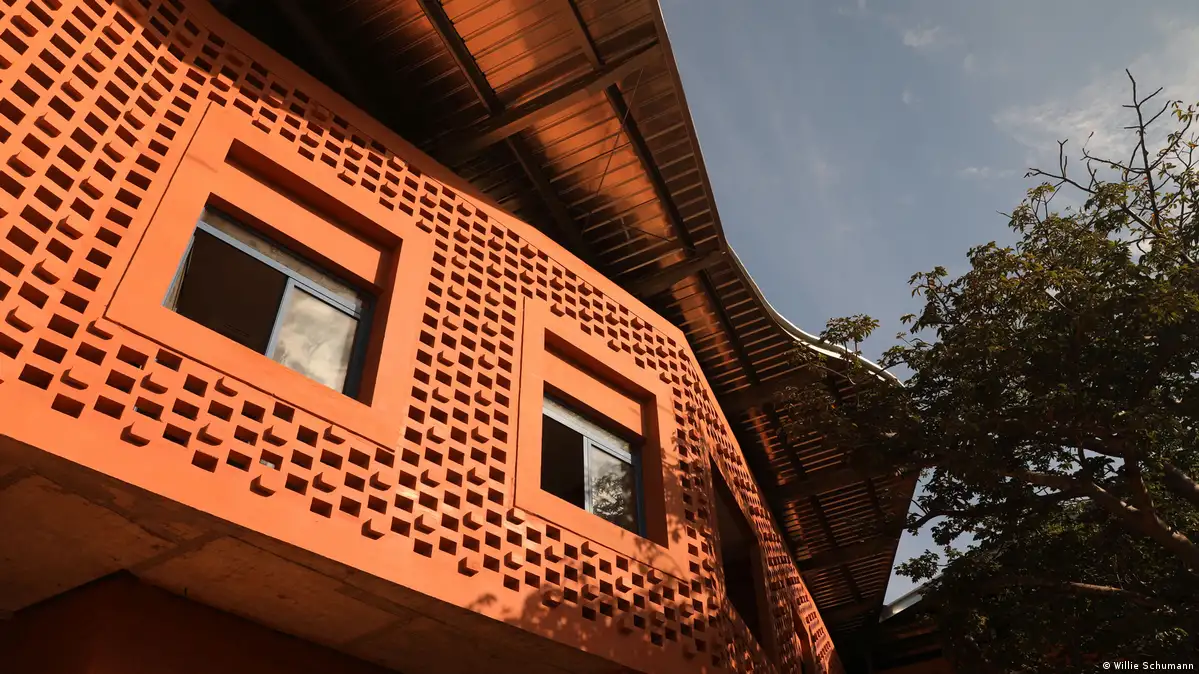
It is a milestone for new architecture in Africa: The new Goethe-Institut in Dakar.
It was designed by pioneer Francis Kéré, the first architect from sub-Saharan Africa to win the prestigious Pritzker Prize.
Kéré selected red clay for its construction, drawing on local traditional building methods and reinterpreting them for a modern context.
An entire generation of young architects — among them Nzinga Mboup and Nicolas Rondet of Dakar-based firm Worofila — is spurring that momentum on.
Through his company Elementerre, engineer Doudou Deme produced the bricks made from West Africa's red earth for the Goethe-Institut Dakar.
Red brick could well be the building material of the future: Sustainable, sourced on-site and a naturally cooling material in a time when temperatures are on the rise. They offer a climate-friendly alternative to gray concrete, the dominant construction material of recent decades, which drives greenhouse gas emissions and accelerates global warming.
It means the new Goethe-Institut Dakar is more than a meeting place, it's a testimony to modern earthen architecture. The future of architecture may well be born in Africa.
Over the course of seven years — years which saw their share of political upheaval — this 56-minute co-production by DW and the Goethe-Institut follows the construction of the new Goethe-Institut in Dakar.
It also documents a broader shift that's placing African building practices at the heart of the architectural discourse.