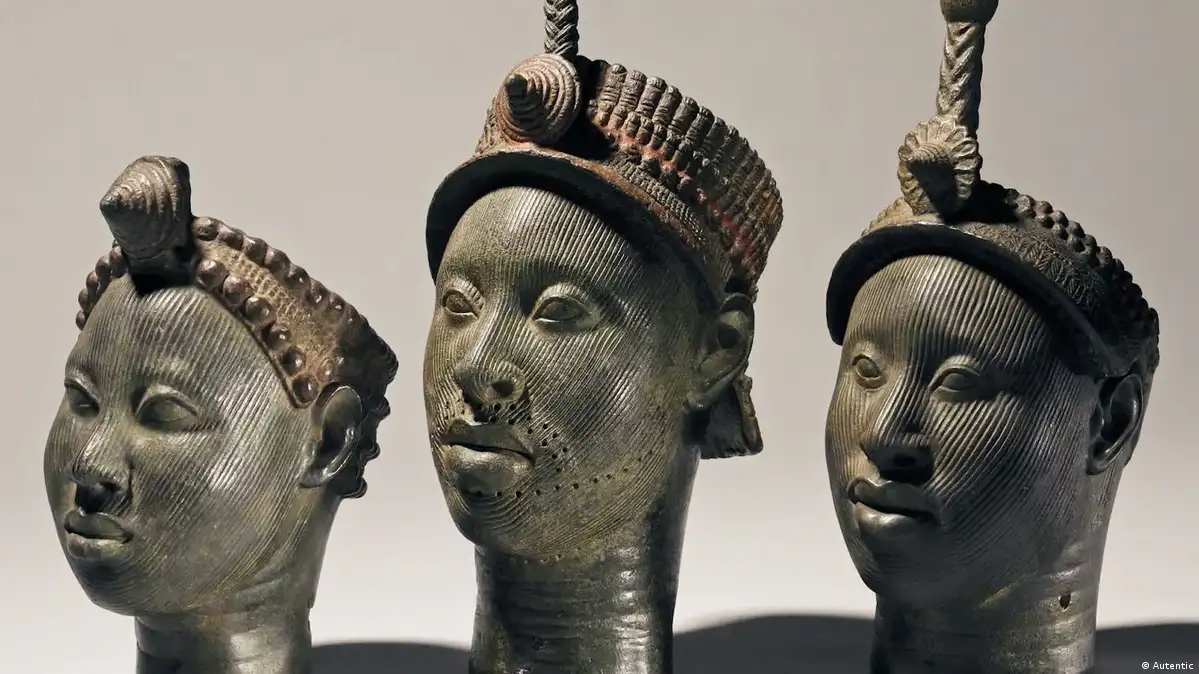
When the German collector and African explorer Leo Frobenius became the first European to reach the city of Ilé-Ifè in south-western Nigeria in 1910, the realistic portrait art he encountered led him to believe he had stumbled upon traces of the lost continent of Atlantis. A golden age in the African rainforest? In the era of imperialism and colonialism, nobody in Europe was willing to believe it. Yet in recent years, several research teams have examined the city’s rise, its trade relations, the daily lives of its citizens and, ultimately, its decline in greater detail.
Whilst a team led by the Frenchman Gérard Chouin is developing a chronology of the city based on its pottery and tiled floors, Nigerian archaeologist Babatunde Babalola takes us on a treasure hunt around a glass factory dating from the early heyday of Ilé-Ifès. The entire area is littered with beads. A monopoly on the production and trade of glass beads became the economic backbone of Ilé-Ifès. Soon, the city became the blueprint for the founding of further kingdoms.
But around the year 1400 AD, the city began to decline. Was a major plague epidemic responsible? Scholars disagree. At the very latest, however, with the arrival of the Portuguese in 1471 and the onset of the transatlantic slave trade, the city’s glory days were finally over.
For more documentaries from DocFilm, follow this link.