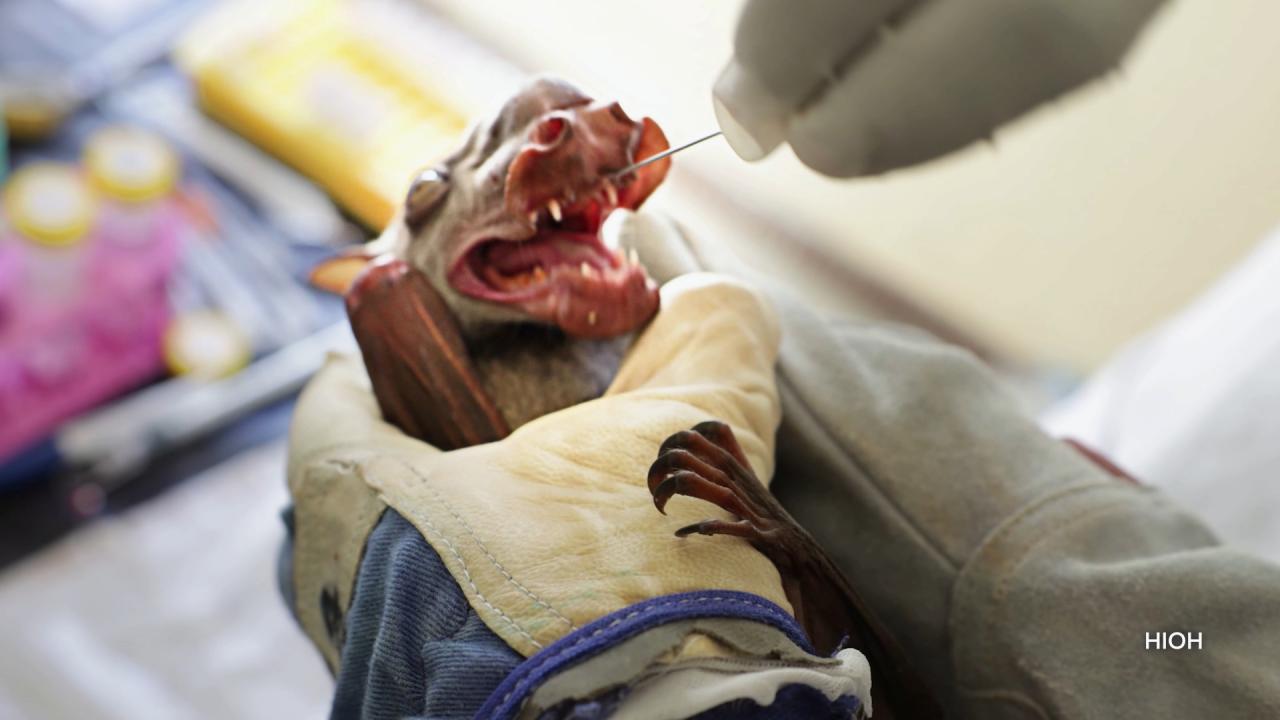
How do zoonotic diseases emerge—and how can we detect potential pandemics early on? Researchers at the Helmholtz Institute for One Health are showing why humans, animals, and the environment should always be considered as aspects of the same problem when it comes to infectious disease. They study the transmission pathways of viruses, bacteria and other potential pathogens.
As part of that process, they regularly collect samples from primates and small mammals in Taï National Park, which is located in Cote d'Ivoire (Ivory Coast). This research has for instance provided compelling evidence of how the Mpox pathogen was transmitted from squirrels to apes, and how the small mammals act as a reservoir host for the virus.
But how can we prevent spillover pathogens from making the jump from animals to humans in the first place? Collaboration across different scientific disciplines is vital to identify risks and interrupt infection chains quickly and effectively. The One Health project in Côte d’Ivoire has been designed serve as a model for other regions around the world.