Quadriga
This browser does not support the video element.
Nuclear material must not fall into the hands of terrorists. That's what leaders from more than 50 countries have agreed at the Nuclear Security Summit in Seoul. They've pledged to work on securing and accounting for all nuclear material by 2014. However, US President Barack Obama failed to make his vision of a world without nuclear weapons a reality, as leaders saw the threat posed by nuclear terrorism as the greatest danger.
But there are still many questions left unanswered. How can world leaders move to prevent the illicit trade in nuclear material? How can checks be put into place to ensure it is only used for civil purposes, such as for nuclear power plants, research reactors or for medical use? And how can the world prevent terrorists from collecting enough nuclear material to construct a bomb?
The world is anxiously watching developments in North Korea and Iran. The two countries continue to flout international pressure to abandon their nuclear programs. North Korea has announced plans to launch a missile with the goal of putting a satellite into orbit, but the US sees it as a cover to test nuclear missiles. Iran is also giving President Obama a headache but he is still hoping for a diplomatic breakthrough. A resumption of nuclear talks with Iran is scheduled for April after the negotiations collapsed a year ago.
President Obama might be more successful in his attempts to bring about the nuclear disarmament of Russia and the United States. In May, he'll hold talks with Russian President Vladimir Putin where he'll try to push along his anti-nuclear agenda.
Tell us what you think: A World Without Nuclear Weapons - Just A Dream?
Send an email: Quadriga@dw.de
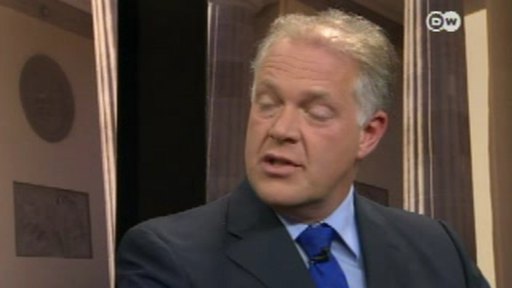
The guests of the show are:
Michael Stürmer – has been the senior correspondent at the German daily "Die Welt" since 1989. Born in Kassel in 1938, Stürmer studied History, Philosophy and Languages in London, Berlin and Marburg. He is also Professor of Modern History at the University of Erlangen.
Joachim Krause– is the director of the Institute of Social Sciences Sociology at the University of Kiel, where he lectures international politics. Since January 2002, he's also been head of the university’s Institute for Security Policy. His areas of expertise are: international politics and security, German and European foreign policy, terrorism, international relations theory and trans-Atlantic relations.
Andrew B. Denison isa political scientist from the United States. He studied both there and in Germany, and is an expert in foreign policy and security issues. He works for the Institute for Strategic Analysis in Bonn, as a researcher and author. Denison is also director of ”Transatlantic Networks”, a research consortium based in Königswinter, Germany. His main emphasis lies on international and domestic security policy focusing particularly on Obama and the USA’s second century, the relationship between US and European economic policies, the future of NATO, Moore’s Law and future security policy.