Quadriga
This browser does not support the video element.
The mood in Europe is turning sour. The financial crisis - and its effects on countries like Greece, Portugal, Spain and Italy - are destroying faith in the European Union. Forced cuts, unemployment, poverty and fear for the future mean old prejudices are resurfacing. Irritation, envy and hostility to neighbouring countries are increasing. Germans are once again being seen as Nazis, Greeks as dishonest, and others as lazy. The European project threatens to collapse acrimoniously.
Nationalists in Europe are on the rise and the effects can already be felt. At the heart of Europe, nation states are once again putting up border controls and checkpoints. Right-wing populists are celebrating elections wins from Finland to Hungary. Far from nationalism being dead, national identity is very much back on the political agenda.
Why are different nations drifting apart? What is stopping them from working together to overcome the crisis? Are differences of approach just too great to be overcome?
Even countries that are trying to help others and provide financial support are coming in for criticism. Southern Europe is distancing itself from its neighbours. Germany faces demands that it deal with the financial crisis, but its chancellor is then accused of having dictatorial tendencies.
Have the bureaucrats in Brussels failed to take into account the importance of national feelings?
What do you think? Europe's Future - The Return Of Nationalism? Email us at: Quadriga@dw.de
The guests of the show are:
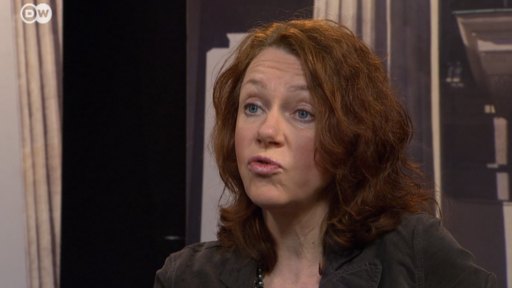
Ulrike Guérot - After graduating in political science, Ulrike Guérot worked initially as a junior professor in the European Studies faculty of Johns Hopkins University in the United States. Later she became a researcher at the Organisation Notre Europe in Paris and was a staff member of the foreign policy working group of the CDU/CSU parliamentary group in the German Bundestag. She moved to Berlin to head the Europe research group at the German Council on Foreign Relations (DGAP), where her specialties include the European integration process. European institutions, German-French ties and German-American relations. Currently she is focussing on Germany's role in Europe.
Katarzyna Stoklosa - Katarzyna Stoklosa comes from Poland and is now an assistant professor in the Department of Border Region Studies at the University of Sonderborg in Denmark, as well as working at the Hannah Arendt Institute for Totalitariansim Research at Dresden University of Technology. She studied at the European University Viadrina in Frankfurt an der Oder in Germany, followed by a period of study at the University of Moscow. Since earning her doctorate, she has worked at various institutions. In 2003, she spent a year as head of the Centre for Central and Eastern Europe at the German Council on Foreign Relations.
Rob Savelberg - The Dutch journalist has been living in Berlin since 1998 and works as a correspondent for the newspaper "De Telegraaf”. He studied history, German Studies and journalism in Amsterdam, Rotterdam and Berlin. In 2009 he published his book ,,Berlijn beweegt. Oude hoofdstad in een nieuw land". He works as a freelancer for various German newspapers.