Quadriga
This browser does not support the video element.
The elections in France and Greece appear to herald a change in Europe - away from austerity and towards growth. Up to now, iron budget discipline and debt curbs have been seen as the best ways to tackle the debt crisis. But more and more politicians in Europe are now calling for a different strategy.
French president-elect Francois Hollande won support with his attacks on Nicolas Sarkozy's support for austerity. He promised voters more growth and more jobs. In particular, he pledged to help a younger generation hard hit by unemployment. The incoming president is calling for the EU's fiscal pact - that keeps budgets under strict limits - to be renegotiated.
The German government is uneasy about Hollande's intentions. Chancellor Angela Merkel wants EU states to stick to strict austerity measures and to avoid the accumulation of extra debt at all costs. But significantly she, too, has begun speaking about the need to promote growth. The question is how.
The Greeks have also rejected Merkel's fiscal strategy at the ballot boxes. The two governing parties suffered historic defeats at the weekend's parliamentary elections. The center-left Pasok party and the center-right Nea Dimokratia have introduced radical spending cuts that go too far for most Greeks. The far-left and the far-right have profited. The radical left-wing alliance Syriza became the second largest power in parliament. During the election, it called for a moratorium on Greek debt payments. Eighty percent of Greeks believe it would be better for the country to leave the Eurozone.
Francois Hollande says austerity need not be Europe's fate and even economic experts and investors warn of the dangers of deep cuts. Angela Merkel appears increasingly isolated in Europe. But Germany is still expected to come up with more money to help other member states.
Can the EU tread the fine line between cuts and investment, or will the differences of opinion tear Europe apart?
Tell us what you think: Game-changing Elections - The End of Austerity in Europe?
Write to us at: Quadriga@dw.de
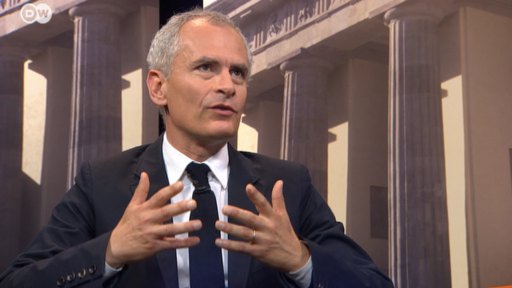
The guests of the show are:
Theodoros Kouvakas- studied art history in Florence and architecture in Venice, and trained to become a journalist. In the 1980s, he wrote for a range of media outlets. Kouvakas covered foreign policy and financial markets for Imerissia SA, a financial and business newspaper. Since 2010, he has served as Berlin correspondent for Real Media SA. His areas of expertise include European financial markets and foreign policy. Kouvakas also has a strong interest in cultural topics.
Arnaud Boutet –The French journalist is the Berlin correspondent for the French public broadcaster France 2. Prior to that, he worked as chief reporter for France 2 in Paris focusing on French domestic policy.
Friedrich Thelen - After earning his doctorate in law, in 1975 he took on the post of director at the German Development Service. Friedrich Thelen then worked as a journalist for the leading weekly newspaper "Die Zeit". In 1978 he switched to the business weekly "Wirtschaftswoche", where he began his career as the magazine's Bonn correspondent and bureau chief. Later he became the bureau chief of Wirtschaftswoche's Berlin office.