Quadriga
This browser does not support the video element.
European leaders still seem largely united in their calls for Greece to stay in the Eurozone. In part because EU treaties have no mechanism for a country to leave the single currency, even if the country defaults. But opinions are increasingly divided on whether having Greece stay in the Eurozone is a price worth paying. A lack of agreement and experience as well as outrage over the demands being made is hampering the development of concrete strategies. The situation is being further complicated by the pressure to act now and political instability. Some are starting to believe that the steps taken so far, such as the austerity imposed by the German Chancellor and calls for strengthening of the firewall are no longer enough to save Greece. So far Merkel's demands have been largely supported by her European partners but, increasingly, their wisdom is being called into question.
The chaotic situation in Greece and the recent increase in pressure on Spain's banks have highlighted the volatility of Europe and also raised fears about the stability of Spain and Italy.
Saving Greece, but at what cost? The billions that have been poured into Greece have not provided enough debt relief, and few still believe Greece will ever be in a position to pay off its debts. So has all this money been wasted? Is it now better for Europe to allow Greece to go its own way or is it already too late? Are there any alternatives? Will the problem be solved by introducing Eurobonds? Would a Greek exit from the Eurozone be a relief for Europe and would the Greeks be able to deal with such a scenario?
Tell us what you think: Make or Break for the Euro - What's the Plan?
Write to us at Quadriga@dw.de
Ulrike Herrmann – started her career in banking before taking up journalism at the Henri Nannen School afterwards studying history and philosophy at Berlin’s Free University. She then worked as a research assistant at the Körber Foundation and was the press officer for Hamburg’s Equal Opportunities minister, Krista Sager. In 2000 she became a political correspondent and business editor at the Berlin daily "taz". These days she is the responsible editor for the opinion page of this newspaper.
Stefano Casertano – He is an academic and a journalist, living in Berlin. He teaches international politics at Potsdam University, and is a Senior Fellow at the Brandenburg Institute for Society and Security. He is a columnist for the Italian business newspaper Linkiesta.it. In 2008 he completed his MBA at Columbia University, and later his Ph.D. Magna cum Laude at Potsdam University. He served as international affairs advisor for the Italian Ministry of Economic Development. He published four books about geopolitics, starting with a History of Cold War in 2009. In 2010, he has been nominated "Italian Young Leader" by the US-Italy council; and "Aspen Young Fellow" by the Aspen Institute.
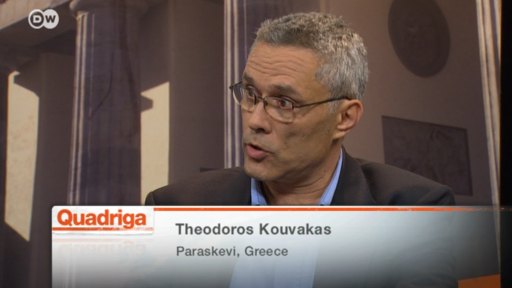
Theodore Kouvakas – studied art history in Florence and architecture in Venice, and trained to become a journalist. In the 1980s, he wrote for a range of media outlets. Kouvakas covered foreign policy and financial markets for Imerissia SA, a financial and business newspaper. Since 2010, he had served as Berlin correspondent for Real Media SA. Now he is the correspondent of the greek weekly newspaper “Paraskeri kai Dekatris” in Berlin. His areas of expertise include European financial markets and foreign policy. Kouvakas also has a strong interest in cultural topics.