Quadriga
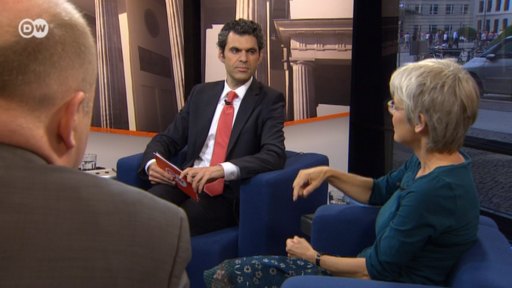
This browser does not support the video element.
Europe is fighting for survival. Greece looks increasingly hopeless, Spain is on the brink of bankruptcy, Italy is under pressure and Cyprus has now also asked for a bailout.The situation is dire and there could be worse to come. Many are looking to Germany, the strongest economy in EU, to solve the Eurozone debt crisis.
But while Germany is expected to show the way out of the crisis, it is also accused of trying to dominate its neighbours when it does not toe their line. Chancellor Merkel, for one, has been under fire for months for insisting on attaching conditions to bailouts for struggling countries. But the "Iron Chancellor" has also made concessions. At last week's EU summit, for example she caved into demands for less stringent bailouts. But before any decisions can be implemented Europe again has to wait for Germany's Constitutional Court which has the last word.
What is the rationale behind this cautious approach of small steps and countless hurdles? Why does Germany say it will offer solidarity only in return for solidity? No other country has invested so much in the European project in the last decades. Was this all political calculation? What are the reasons for Germany's insistence on stability? Is it the desire for power, the need to be in control or is it motivated by a genuine concern for the future of Europe?
Tell us what you think.
Cautious Germany - The Austerity Standoff
Write to us at Quadriga@dw.de
Andreas Rinke- After studying history in Hanover, London and Paris, Andreas Rinke began a career in journalism, initially working as a political editor at the Hannoversche Allgemeine Zeitung. He came to Berlin in the year 2000 to take up a job at the Handelsblatt. He works for the daily financial newspaper as deputy bureau chief responsible for foreign and security policy. Today he is working as Senior Political Correspondent for the Newsagency Reuters.
Hannah Cleaver– She is currently acting editor of thelocal.de – an online
newspaper covering German news in English. She trained as a journalist in the UK, and worked on a regional newspaper there before coming to Berlin in 1999. Since then she has worked as a
freelance journalist for a wide range of newspapers and magazines. This included a long stint as reporter for the UK’s Daily Telegraph, as well as extensive work for the British tabloid newspapers – but also occasional stories for Diver magazine.
Ulrike Herrmann –started her career in banking before taking up journalism at the Henri Nannen School afterwards studying history and philosophy at Berlin’s Free University. She then worked as a research assistant at the Körber Foundation and was the press officer for Hamburg’s Equal Opportunities minister, Krista Sager. In 2000 she became a political correspondent and business editor at the Berlin daily "taz". These days she is the responsible editor for the opinion page of this newspaper.