Quadriga
This browser does not support the video element.
But Social Democratic parties aren’t the only ones profiting from the current climate. That said, one of the oldest in the world is now celebrating its 150th anniversary. The German SPD was first founded as the ‘Allgemeiner Deutscher Arbeiterverein’ back in 1863.
Leftist governments in Latin America – whether in Venezuela, Ecuador or Argentina – are going much further in nationalization and distribution programs than their European partners would ever dare. That’s one reason why many have rubberstamped their ideals and leaders as populist. In the countries involved in the Arab Spring, Islamist parties have taken the reins, coupling promises of state-run welfare systems with religious expectations.
But what is a truly ‘just’ system? Are party structures and organizations a prerequisite for success, or do parties have to shift gears in order to connect with modern social movements? German SPD leader Sigmar Gabriel wants to resuscitate cooperation between leftist parties on an international scale, and the country’s largest socialist party is founding the ‘Progressive Allliance’ to do so. As a necessary measure, the SPD will also be cutting its support for the worldwide Socialist International association.
Socialism or social democracy? Party or movement? Rebirth or a continuation of old concepts of social justice?
Tell us what you think: Social Democracy - New Life in an Old Idea?
Quadriga@dw.de
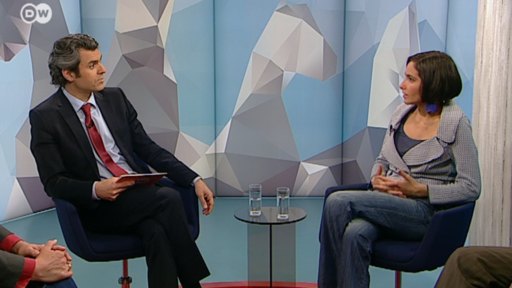
Our guests:
Alan Posener – was born in London and grew up in Kuala Lumpur and Berlin (West). A teacher by training, he quit school to become a freelance author and journalist. At present, he is Chief Commentator with "Welt am Sonntag". Posener is the author of several critically acclaimed books, among them biographies of the American idols John F. Kennedy, Franklin D. Roosevelt and Elvis Presley.
Ursula Weidenfeld – has a PhD in history from the University of Bonn and studied journalism at the Holtzbrinck School in Düsseldorf. She became Berlin correspondent and a deputy editor at the magazine “Wirtschaftswoche” before going on to head the corporations desk at the Financial Times Deutschland. In 2001 she took on the job of economics editor at the daily “Der Tagesspiegel” in Berlin. From May of 2008 until January of 2009, Weidenfeld was also editor-in-chief at the business magazine “Impulse “. The journalist regularly writes for the financial daily “Handelsblatt”, and a collection of those articles has been published in book form. Ursula Weidenfel was granted the Ludwig Erhard Prize for Economic Commentary. She is currently a freelancer.
Laura Lucchini – After studying communication sciences at university in Milan and Madrid, she completed a master’s degree in journalism in Buenos Aires. Today, she is a freelance journalist for the Argentinean newspaper “La Nación”, the “El País” in Spain, and the Italian publications “Linkiesta” and “L´Unità.”