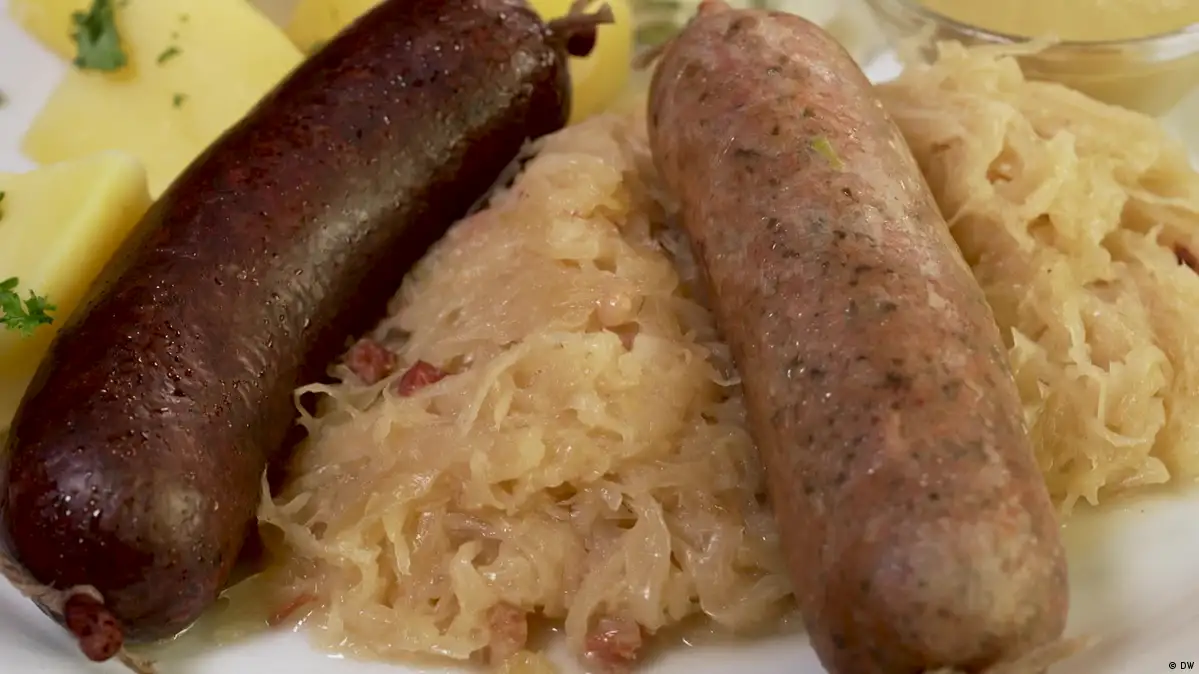
In northern Germany, white cabbage is cultivated on 3,000 hectares of land, producing around 90 million heads each year. That is more than the entire population of Germany, often referred to colloquially as "Krauts."
White cabbage holds traditional significance due to its excellent storage capabilities; many varieties can last until the following summer, when new cabbage becomes available. Sauerkraut has played an important role for thousands of years due to its long shelf life and high vitamin C content. It protected sailors from scurvy, a deficiency disease, and provided sustenance for soldiers during World Wars.
The term "Krauts” for Germans originated during this time, primarily from Americans. Sauerkraut is made with a process of fermentation. In a cabbage factory located in the northern German region of Dithmarschen, visitors can watch how white cabbage is transformed into sauerkraut. Euromaxx reporter Jana Oertel covers the story from northern Germany.