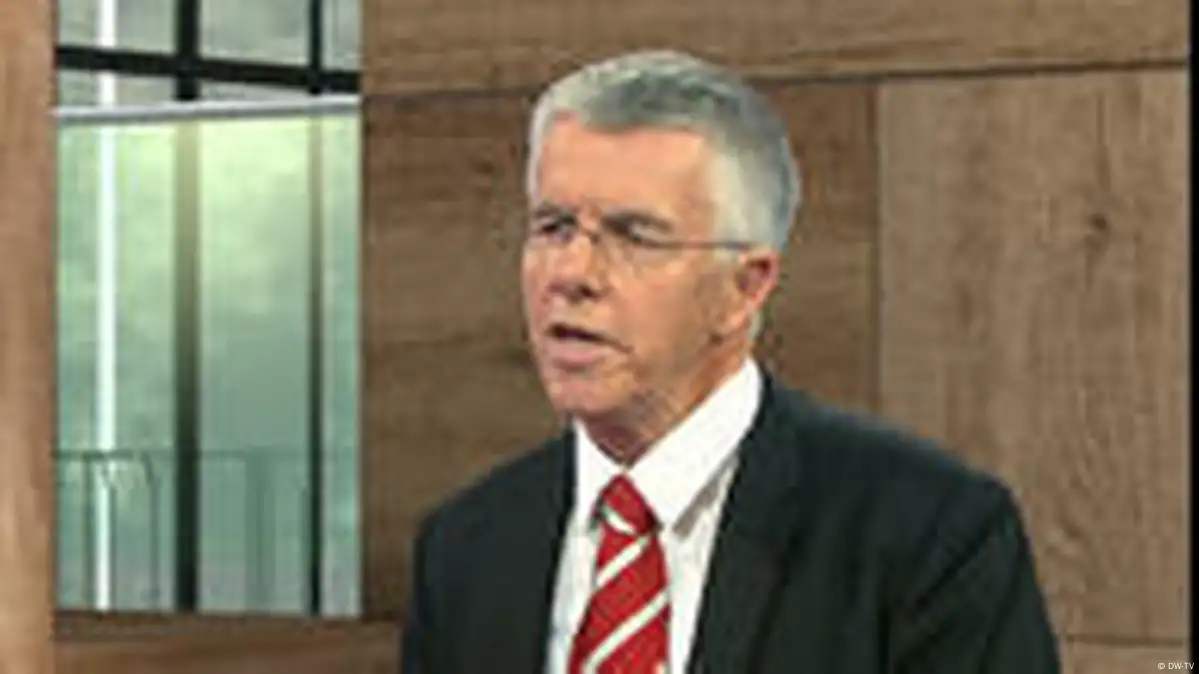
DW-TV: "Thomas Straubhaar joins us now from the Hamburg Institute of International Economics. What do you think? Are they learning something the economists of today missed out on?"
Thomas Straubhaar: "Hopefully, yes. I think it's time to revise out theories and to implement insights we have received from the financial crisis and my belief was before that financial markets are efficient and today I think that the market failure is also something that hits financial markets and that it is not the exception it is the rule that financial markets may fail."
DW-TV: "So have you had to change your way of thinking?"
Thomas Straubhaar: "Absolutely. I was before much more optimistic about the efficiency of markets and especially the financial markets. I thought they really deal with all the information they have and nowadays I think that interests are more relevant for actors, their personal interests and what they really try to change."
DW-TV: "Now, we're in unchartered waters in this euro crisis and economics involves a lot of theory. How much of it is actually base on practical experience?"
Thomas Straubhaar: "Quite a lot. I think the new trends in economics goes toward empirical tests of the theories and I think macro economists of today they always have to look at the data and if the data confirm the theories and whether they have to change theoretical arguments."
DW-TV: "The head of Deutsche Bank, Josef Ackermann, has warned there are a lot of banks that could go under. Haven't the lenders learnt anything since the Lehman Brothers crisis?"
Thomas Straubhaar: "I think they really learnt the lessons but the real question is what are the consequences? How quickly can you change politics to implement all these insights? I think the difficult part is you have to convince all the countries to get toward global rules for the global actors in the financial markets. And this is a difficult task because the interests in the United States, in Great Britain are different from the interests of continental Europe."
DW-TV: "Economists, politicians - none of them seem to have the right solution, and of course there isn't just one solution. But are we going to get some workable proposals some time soon?"
Thomas Straubhaar: "Yes absolutely. I think that today we should think in the techniques of scenarios. For example this fall we shall probably see different scenarios for the Eurozone, whether they will go forward toward a kind of fiscal transfer union to make Europe even stronger than before, or another scenario could be that it breaks up and that some countries leave the monetary union. So I think the insight is that we should probably think in scenarios and indicate what they mean and what should they really tell politics."
DW-TV: "Eurobonds have sparked heated debate. But everyone I've spoken to is against them? Do they stand a chance?"
Thomas Straubhaar: "I'm not sure if this is a typical German view. In Germany we are against Eurobonds because it means Germany is the payer of all the costs that may come with it. But I think it may be one of the scenarios, one of the solutions to take that we have kind of a Eurobond, kind of a common facility to give weaker countries a kind of credit."
DW-TV: "A GLOBAL ban on short-selling?"
Thomas Straubhaar: "Yes absolutely. But again this is definitely something we should do immediately, but again it is difficult to find an agreement on a global basis because if you do not go toward a global agreement you always have gaps you can go in to.
DW-TV: "Is it the case that we HAVE to start thinking more globally? Globalization took a hold a long time ago."
Thomas Straubhaar: "Indeed I think this is the key question. I think the markets have become global the actors have become global, but the regulations, politics is still kind of national and this is a discrepancy you have to overcome sooner or later, hopefully sooner or later."
DW-TV: "Thomas Straubhaar. Thank you very much for your insight."
(Interview: Ben Fajzullin)