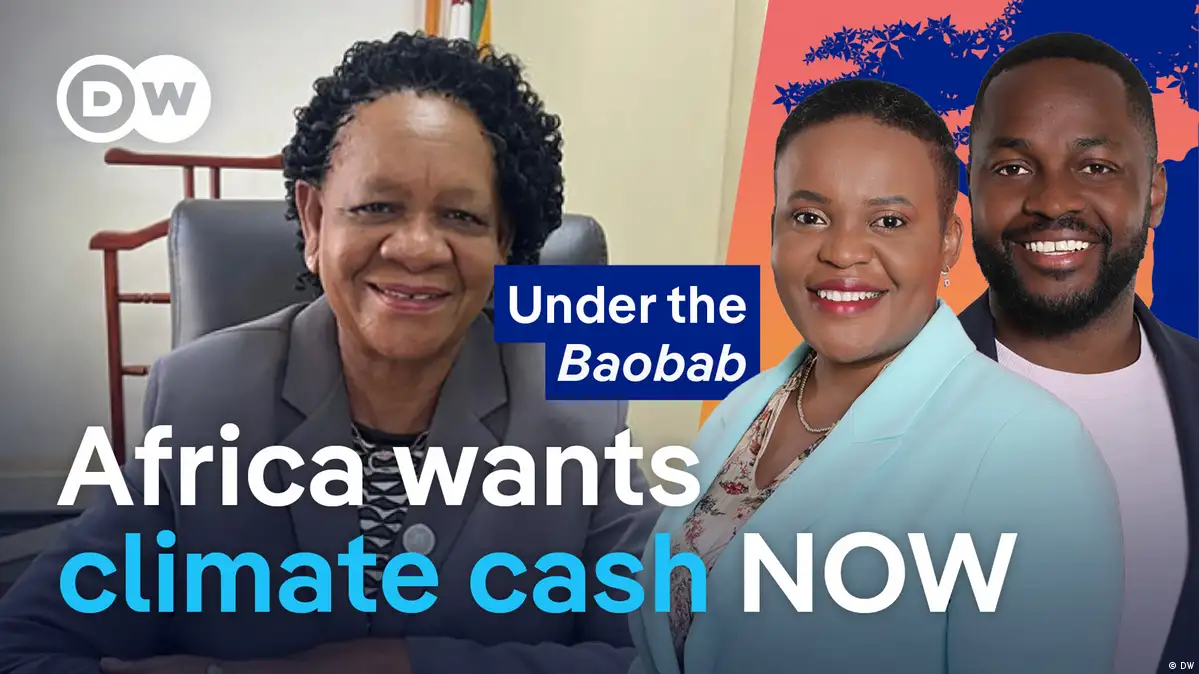
Mimi:
Every year, Africa is getting hotter, and it does so faster than the global average. We have constant causes of droughts, floods, and rising food prices.
George: Yet, the continent contributes the least to climate change, but suffers the most. The question is, why?
George:
And that’s where it gets complicated. One would think that with so much talk about climate change, we would see equal action.
Mimi: However, Africa keeps asking for help, and the world keeps promising money, like the $300 billion per year pledge? One year later, why are we still in what they call the “implementation phase?”
Mimi:
So today on Under the Baobab, we’re going beyond the slogans and diplomatic speeches to look at the real-life implications of climate change on African homes, farms, and futures.
George:
Why is climate funding to affected nations low and slow? That is our discussion today.
Mimi:
I’m Mimi Mefo Newuh. Welcome to Under the Baobab.
George:
And I’m George Okachi. This show makes Africa’s complex stories personal.
Mimi:
Every Friday, we sit down with policymakers, leaders, and experts to break down the issues that matter most. Subscribe to our YouTube channel and join the conversation.
Some of you in the comment section have been asking us to explain climate change in simple terms, not the technical jargon, but what it means for daily life. Today, we’re doing exactly that.
George:
And today we are having two people leading their countries’ climate response: Liberia’s Environmental Protection Agency Executive Director, Dr Emmanuel Urey Yarkpawolo, and Zimbabwe’s Minister of Environment, Climate & Wildlife, Evelyn Ndlovu.
Mimi:
Let’s start with the basics, George. Climate change isn’t just numbers and negotiations. It is not big conferences held in top cities across the world. It is drought, failed harvests, rivers that are disappearing, and unpredictable seasons. For many Africans, that means hunger. It means displacement, it means wars.
George:
In Zimbabwe, nearly 8 million people are food insecure today. In Liberia, 81% face moderate or severe food insecurity, and 93% cannot afford a healthy diet. These aren’t just statistics; they’re lives impacted. These have severe consequences for everything else.
Mimi:
I vividly recall that when I was younger, in Cameroon, the rainy season spanned from April to September. Later, it started drifting. And these weather patterns will determine when to sow and to harvest. But now, our parents keep telling us, they are confused because of unpredictable weather conditions. What about you, George?