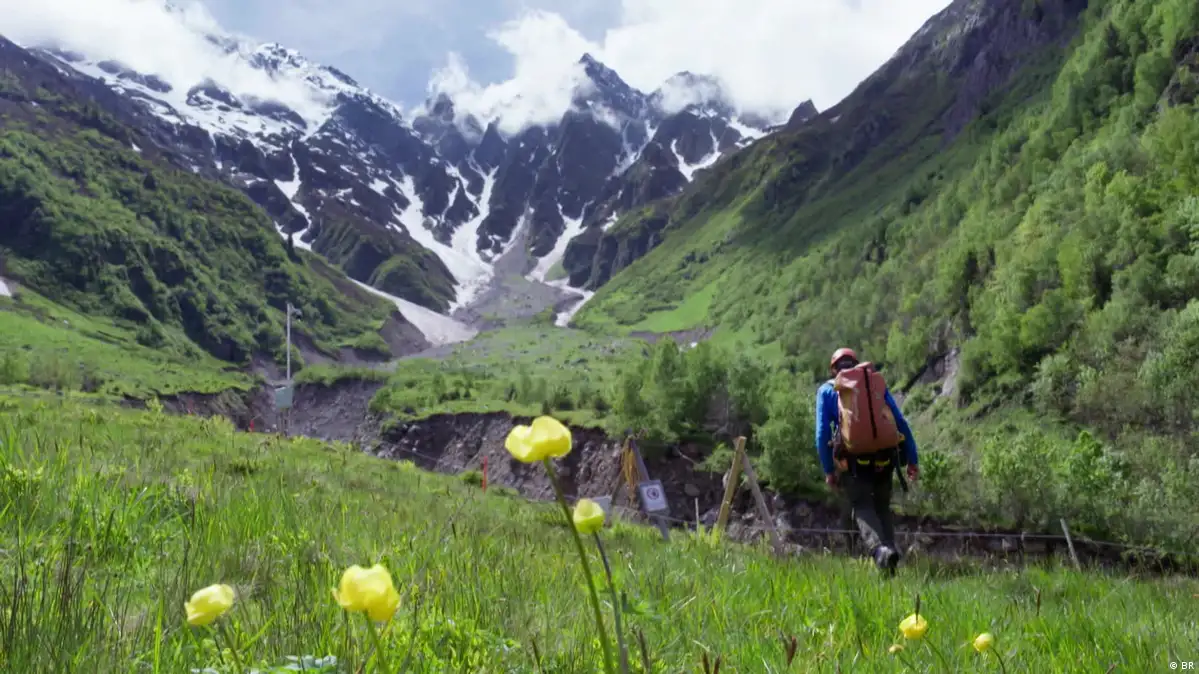
Climate change is making mudslides and flash floods a growing threat to people and infrastructure, as storms become increasingly frequent and severe, and glaciers melt. How are Europe's Alpine communities dealing with the danger?
In July 2024, the northern Italian village of Cogne was cut off from the outside world for four weeks, because the road into the Aosta valley had been washed away. Hotel manager Nathalie Fattore sustained minor injuries when a mudslide buried the hotel's terrace and outdoor areas. After cleaning up the damage, she is now trying to restore a sense of normality in the village, together with engineer Guiseppe Cutano.
He volunteers for the local civil defense group, helping to build protective barriers to keep residents and tourists safe, while also devising strategies to ensure the village's future survival.
In southern Germany's Bavarian Oberland region, mountain expert Horst Hofmann works for the Garmisch-Partenkirchen Water Management Office. In 2018, a flooded mountain stream filled with mud and fallen trees swept through the town. Now, Hofmann is helping to install monitoring systems and is overseeing the construction of a new kind of protective structure known as a "wildwood grate". This challenging project involves working in remote mountain valleys.
It's clear that worsening natural disasters cannot be kept at bay solely by ever-larger protective infrastructure. So how much intervention in the natural world is reasonable in order to keep people and property safe?
The challenge facing Alpine communities is highlighted by the case of Blatten, Switzerland. In May 2025, a landslide buried around 90 percent of the village. The disaster showed just how difficult it can be to find the right balance in a region that is increasingly under threat.
For more documentaries from Close Up, follow this link.