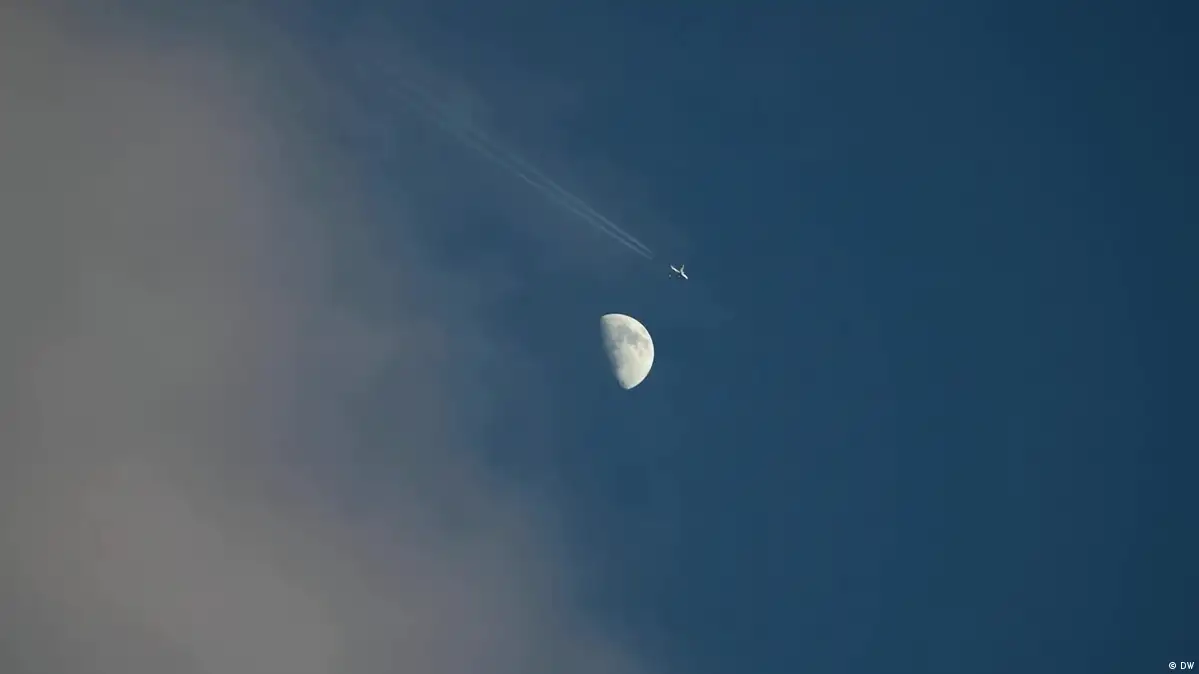
The Moon is often visible during the daytime because it reflects sunlight and is much closer to Earth than stars. Unlike stars, which are drowned out by scattered sunlight in our atmosphere, the Moon’s brightness makes it stand out. Its visibility depends on its phase and position in the sky. The Earth rotates on its axis once a day, while the Moon orbits the Earth in about a month. Depending on the relative positions of the Sun, Earth and Moon, we see different amounts of our satellite’s illuminated side. The Moon is particularly visible during the day in the so-called crescent phases. The best time to spot it during the day is during the first or last quarter, when it appears as a "half-moon”. It is then bright and high in the sky above us for many hours.